Portable AC vs Window AC: Monthly Cost
Enter the BTU, each unit's CEER and the hours you run it, pick your state, and see what the portable and the window unit cost per month for the same cooling.
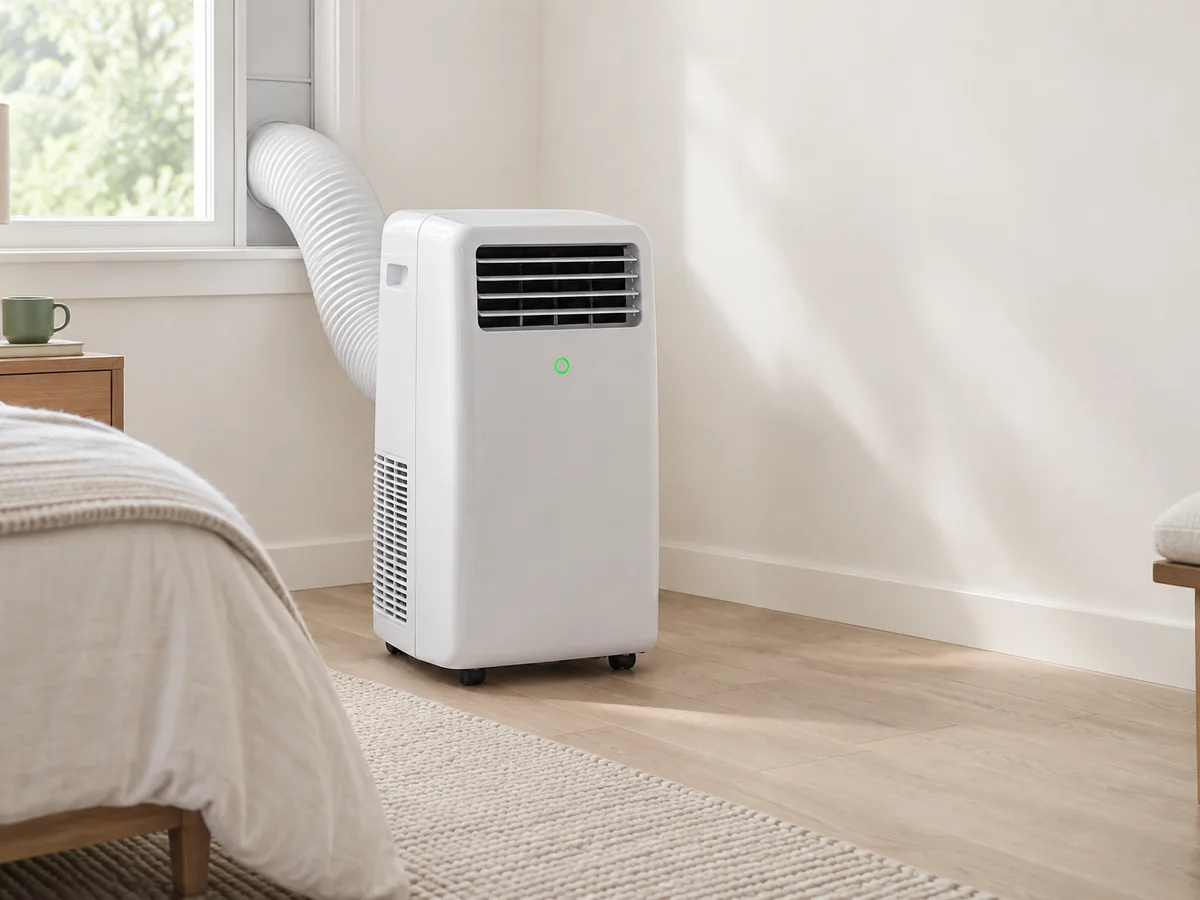
Portable vs window AC
C06Scenario A
Sets the electricity rate. Pick US average if you're not sure.
From EIA for US average. Use the rate on your bill if you know it.
Rate used: 18.4¢/kWh · US average · EIA reference 2025–26 (data as of 2026-09-26) ·
The portable costs more per month by
Portable: $50.47 a month · window: $32.12 a month for the same 8,000 BTU.
- Portable AC per month
- $50.47
- Window AC per month
- $32.12
- Difference (portable − window)
- $18.35
- Note
- A single-hose portable loses about 30% of its nominal capacity (SACC rating).
Estimate. Formula and sources are under “How it works”. Change any input; the result updates as you type.
Formula
How it works
For each unit: cost per month = BTU ÷ CEER ÷ 1,000 × hours per day × 30 × rate.
CEER is BTU of cooling per watt-hour. A portable sits inside the room, so its compressor and hot parts add heat to the space it's cooling, and a single-hose model pushes room air outside, which pulls warm air back in through gaps. Since 2017, DOE rates portables by Seasonally Adjusted Cooling Capacity (SACC), which counts those losses; that's why portable CEERs are typically 6–8 against 11 or more for window units.
Sources: SACC and CEER: DOE portable and room air conditioner test procedures (10 CFR 430, 2017). Electricity rate: EIA Electric Power Monthly table 5.6.A.
Worked example
A worked example
In California at 32.0¢/kWh, a 10,000 BTU portable at CEER 6.5 costs an estimated $147.69 a month running 10 hours a day. A window unit of the same BTU at CEER 12 costs $80.00. The portable costs $67.69 a month more for the same rated cooling.
Reference
By state, at the default inputs
The portable costs more per month by, with this page's default inputs and each state's reference prices (EIA reference 2025–26, data as of 2026-09-26).
| US average | $18.35 | 18.4¢/kWh |
|---|---|---|
| Alabama | $15.46 | 15.5¢/kWh |
| Alaska | $24.94 | 25.0¢/kWh |
| Arizona | $14.96 | 15.0¢/kWh |
| Arkansas | $12.97 | 13.0¢/kWh |
| California | $31.92 | 32.0¢/kWh |
| Colorado | $15.96 | 16.0¢/kWh |
| Connecticut | $29.92 | 30.0¢/kWh |
| Delaware | $16.96 | 17.0¢/kWh |
| District of Columbia | $18.95 | 19.0¢/kWh |
| Florida | $14.96 | 15.0¢/kWh |
| Georgia | $14.46 | 14.5¢/kWh |
| Hawaii | $41.89 | 42.0¢/kWh |
| Idaho | $11.97 | 12.0¢/kWh |
| Illinois | $16.96 | 17.0¢/kWh |
| Indiana | $15.46 | 15.5¢/kWh |
| Iowa | $13.46 | 13.5¢/kWh |
| Kansas | $14.46 | 14.5¢/kWh |
| Kentucky | $12.97 | 13.0¢/kWh |
| Louisiana | $12.47 | 12.5¢/kWh |
| Maine | $25.93 | 26.0¢/kWh |
| Maryland | $18.95 | 19.0¢/kWh |
| Massachusetts | $28.92 | 29.0¢/kWh |
| Michigan | $19.45 | 19.5¢/kWh |
| Minnesota | $15.46 | 15.5¢/kWh |
| Mississippi | $13.46 | 13.5¢/kWh |
| Missouri | $12.97 | 13.0¢/kWh |
| Montana | $12.97 | 13.0¢/kWh |
| Nebraska | $11.97 | 12.0¢/kWh |
| Nevada | $14.96 | 15.0¢/kWh |
| New Hampshire | $26.93 | 27.0¢/kWh |
| New Jersey | $21.94 | 22.0¢/kWh |
| New Mexico | $14.96 | 15.0¢/kWh |
| New York | $24.94 | 25.0¢/kWh |
| North Carolina | $14.46 | 14.5¢/kWh |
| North Dakota | $11.47 | 11.5¢/kWh |
| Ohio | $16.46 | 16.5¢/kWh |
| Oklahoma | $12.97 | 13.0¢/kWh |
| Oregon | $14.46 | 14.5¢/kWh |
| Pennsylvania | $18.45 | 18.5¢/kWh |
| Rhode Island | $28.92 | 29.0¢/kWh |
| South Carolina | $14.96 | 15.0¢/kWh |
| South Dakota | $12.97 | 13.0¢/kWh |
| Tennessee | $13.46 | 13.5¢/kWh |
| Texas | $15.46 | 15.5¢/kWh |
| Utah | $11.97 | 12.0¢/kWh |
| Vermont | $21.94 | 22.0¢/kWh |
| Virginia | $15.46 | 15.5¢/kWh |
| Washington | $11.97 | 12.0¢/kWh |
| West Virginia | $15.46 | 15.5¢/kWh |
| Wisconsin | $17.45 | 17.5¢/kWh |
| Wyoming | $12.47 | 12.5¢/kWh |
Questions
FAQ
Why are portable ACs less efficient?
The whole machine, including its hot compressor, sits inside the room, and a single-hose unit exhausts room air it has already cooled. At the US average rate, an 8,000 BTU portable at CEER 7 costs an estimated $50.47 a month (8 hours a day) against $32.12 for a window unit at CEER 11: $18.35 more.
Dual hose vs single hose?
A dual-hose portable pulls outdoor air through one hose to cool its condenser and blows it back out the other, so it doesn't pull warm air into the room. It usually carries a higher SACC and CEER for the same nameplate BTU. Enter the CEER from the unit's label to compare.
What's the best option for a room without a window?
A portable still needs a vent to the outside (a window kit, a wall or a sliding-door panel). If there's no window at all, a ductless mini split head needs only a small hole through the wall for its lines. See the Mini Split Size calculator for the BTU.
How much more does a portable cost in Texas?
At 15.5¢/kWh, the default 8,000 BTU portable costs about $42.51 a month against $27.05 for a window unit: $15.46 more. In Georgia, a 12,000 BTU portable running 12 hours a day costs $78.30 vs $56.95.
Related