Smart Thermostat Savings Calculator
Enter your home's size, how well it's insulated, your heating type and your AC's size, pick your state, and see your estimated yearly heating and cooling cost and what a smart thermostat's typical reduction is worth on it.
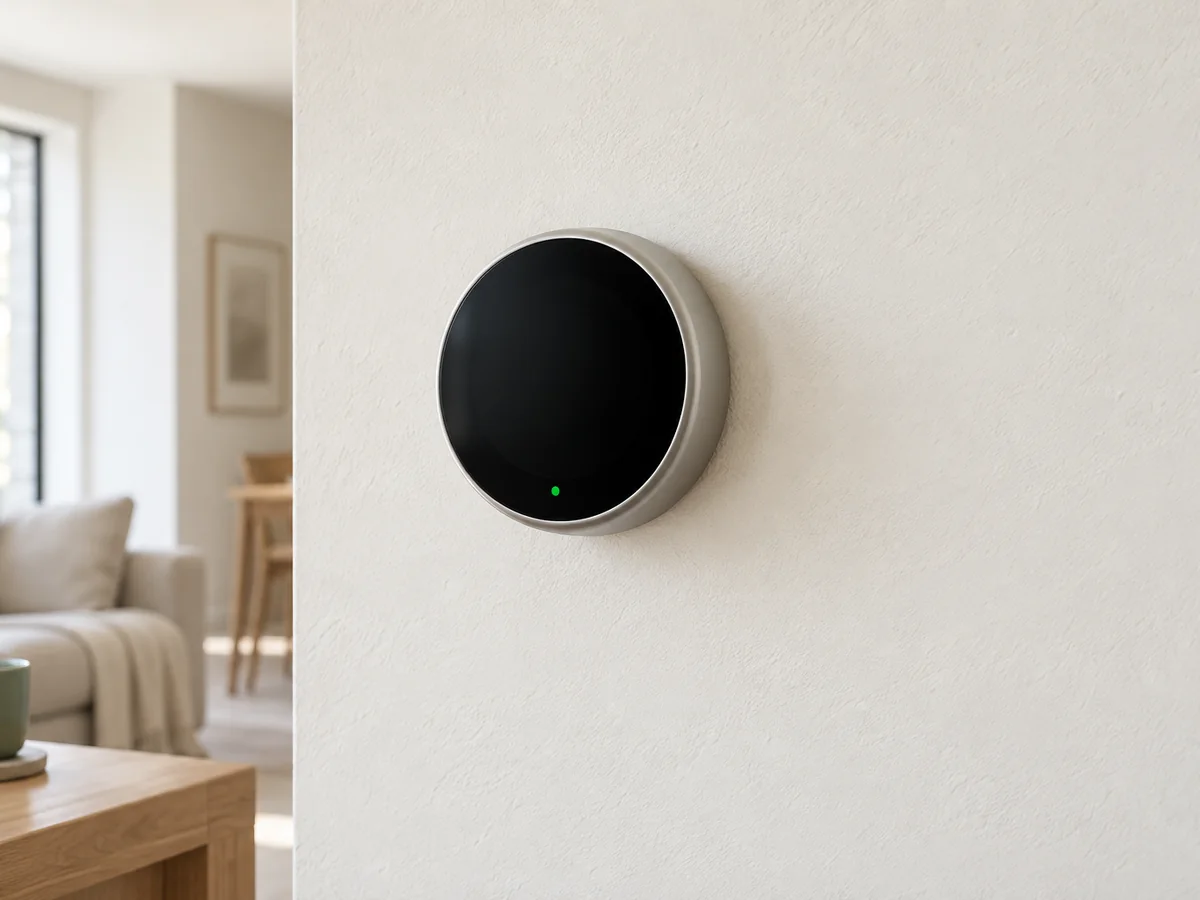
Smart thermostat savings
G04Scenario A
Sets the electricity rate. Pick US average if you're not sure.
From EIA for US average. Use the rate on your bill if you know it.
Rate used: 18.4¢/kWh · US average · EIA reference 2025–26 · gas $1.55/therm · 4,500 heating degree-days · climate zone 4 (data as of 2026-09-26) ·
Estimated savings per year
On an estimated $1,822.46 a year of heating and cooling in US average. Heat pump COP and cooling hours by climate zone are Home Kilowatt model values.
- Estimated HVAC cost per year
- $1,822.46
- Savings (8% heating + 10% cooling)
- $156.21
- Payback (a $200.00 thermostat)
- 1.3 years
Estimate. Formula and sources are under “How it works”. Change any input; the result updates as you type.
Formula
How it works
First the calculator estimates what your home spends on heating and cooling a year:
- Heating load (million BTU) = sq ft × envelope factor (good 0.25 · average 0.35 · poor 0.50 BTU per hour per °F per sq ft) × heating degree-days × 24 ÷ 1,000,000
- Heating cost = heating load × cost of 1 million BTU of delivered heat: gas at your state's price and a 90% efficient furnace, or electricity at your rate and a heat pump whose seasonal COP depends on your climate zone (3.6 in zone 1 down to 2.0 in zone 7)
- Cooling cost = AC tons × 12,000 ÷ 14 × cooling hours for your zone ÷ 1,000 × rate (cooling hours: 2,400 in zone 1 · 2,000 · 1,500 · 1,100 · 800 · 600 · 400 in zone 7)
Then it applies the average reductions ENERGY STAR reports for certified smart thermostats:
- Estimated yearly difference = heating cost × 8% + cooling cost × 10%
- Payback = $200 thermostat ÷ yearly difference
Sources: ENERGY STAR smart thermostat criteria: average 8% heating and 10% cooling reduction, based on field data from Nest and ecobee users. Envelope factors are a simplification of ACCA Manual J. Degree-days: NOAA 1991–2020 normals; climate zones: IECC via DOE/PNNL; electricity: EIA Electric Power Monthly table 5.6.A; natural gas: EIA.
Worked example
A worked example
A well-insulated 2,400 sq ft Texas home with a heat pump and a 4-ton AC spends an estimated $1,447.64 a year on heating and cooling, most of it cooling. A smart thermostat's typical 8% on heating and 10% on cooling comes to about $137.07 a year, so a $200 thermostat pays for itself in about 1.5 years.
Reference
By state, at the default inputs
Estimated savings per year, with this page's default inputs and each state's reference prices (EIA reference 2025–26, data as of 2026-09-26).
| US average | $156.21 | 18.4¢/kWh |
|---|---|---|
| Alabama | $141.32 | 15.5¢/kWh |
| Alaska | $219.85 | 25.0¢/kWh |
| Arizona | $116.87 | 15.0¢/kWh |
| Arkansas | $121.82 | 13.0¢/kWh |
| California | $209.30 | 32.0¢/kWh |
| Colorado | $131.47 | 16.0¢/kWh |
| Connecticut | $234.94 | 30.0¢/kWh |
| Delaware | $158.00 | 17.0¢/kWh |
| District of Columbia | $160.37 | 19.0¢/kWh |
| Florida | $104.32 | 15.0¢/kWh |
| Georgia | $127.01 | 14.5¢/kWh |
| Hawaii | $259.20 | 42.0¢/kWh |
| Idaho | $111.30 | 12.0¢/kWh |
| Illinois | $146.08 | 17.0¢/kWh |
| Indiana | $130.45 | 15.5¢/kWh |
| Iowa | $137.83 | 13.5¢/kWh |
| Kansas | $134.20 | 14.5¢/kWh |
| Kentucky | $122.19 | 13.0¢/kWh |
| Louisiana | $104.61 | 12.5¢/kWh |
| Maine | $272.18 | 26.0¢/kWh |
| Maryland | $163.65 | 19.0¢/kWh |
| Massachusetts | $267.53 | 29.0¢/kWh |
| Michigan | $148.53 | 19.5¢/kWh |
| Minnesota | $155.33 | 15.5¢/kWh |
| Mississippi | $103.59 | 13.5¢/kWh |
| Missouri | $139.21 | 13.0¢/kWh |
| Montana | $133.55 | 13.0¢/kWh |
| Nebraska | $126.53 | 12.0¢/kWh |
| Nevada | $120.58 | 15.0¢/kWh |
| New Hampshire | $259.68 | 27.0¢/kWh |
| New Jersey | $166.76 | 22.0¢/kWh |
| New Mexico | $120.08 | 15.0¢/kWh |
| New York | $199.27 | 25.0¢/kWh |
| North Carolina | $147.32 | 14.5¢/kWh |
| North Dakota | $139.51 | 11.5¢/kWh |
| Ohio | $144.60 | 16.5¢/kWh |
| Oklahoma | $128.54 | 13.0¢/kWh |
| Oregon | $150.92 | 14.5¢/kWh |
| Pennsylvania | $163.50 | 18.5¢/kWh |
| Rhode Island | $246.92 | 29.0¢/kWh |
| South Carolina | $127.75 | 15.0¢/kWh |
| South Dakota | $130.56 | 13.0¢/kWh |
| Tennessee | $113.45 | 13.5¢/kWh |
| Texas | $118.54 | 15.5¢/kWh |
| Utah | $109.81 | 12.0¢/kWh |
| Vermont | $249.58 | 22.0¢/kWh |
| Virginia | $133.44 | 15.5¢/kWh |
| Washington | $134.29 | 12.0¢/kWh |
| West Virginia | $125.07 | 15.5¢/kWh |
| Wisconsin | $148.56 | 17.5¢/kWh |
| Wyoming | $129.79 | 12.5¢/kWh |
Questions
FAQ
Do smart thermostats really save money?
On average, yes. ENERGY STAR's figures are 8% of heating and 10% of cooling. With US-average climate and prices, a 2,000 sq ft home with average insulation, a gas furnace and a 3-ton AC comes to about $1,822.46 a year for heating and cooling; the thermostat's share is about $156.21, a payback of about 1.3 years. If you already set back the temperature by hand every day, expect less.
Nest vs ecobee: which saves more?
The ENERGY STAR averages come from studies of both brands' users, and this calculator applies the same 8% and 10% to any certified model. Any difference between brands depends more on how you use the schedule than on the brand.
Does a smart thermostat work with a heat pump?
Yes, and it matters to set it up as one. Deep setbacks can make a heat pump call for its backup electric strips to recover, which uses a lot more power. Use the thermostat's heat-pump settings. In the US-average example, a heat pump home comes to about $1,976.43 a year and a $168.52 estimated difference.
How is this different from a thermostat setback calculator?
This one uses the average result of smart-thermostat users. The thermostat setback calculator computes the effect of a specific setback you choose: how many degrees and for how many hours.
Why does my state change the answer so much?
Because the thermostat saves a percentage of what you spend. A home in a cold state with expensive gas spends more on heat, so 8% of it is more dollars.
Related