Portable Generator Size Calculator
Check the appliances you need during an outage and get the smallest common portable generator size that can start them and carry them, plus the fuel it will burn at that load.
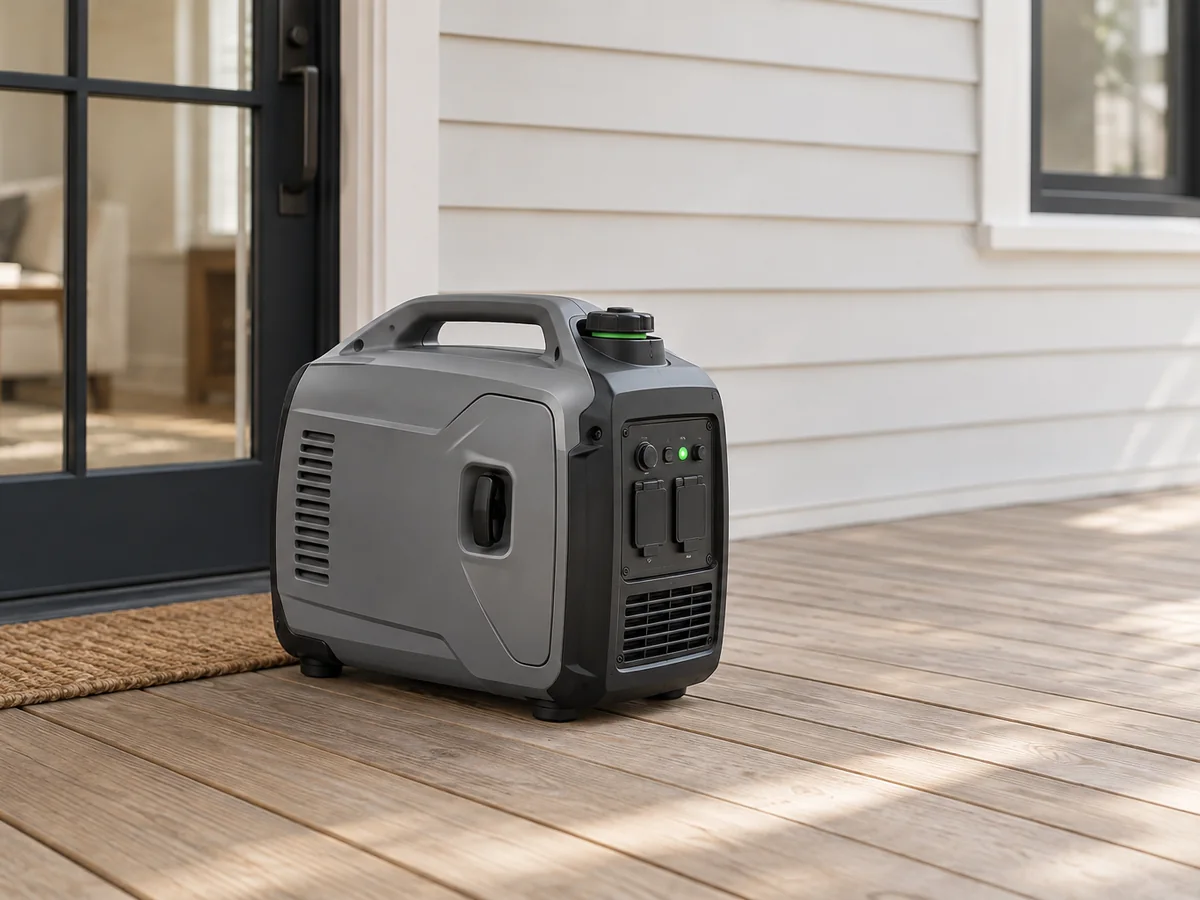
Portable generator size
E04Scenario A
Recommended generator size
Running 1,500 W, 3,000 W when the largest motor starts.
- Running load
- 1,500 W
- Starting peak
- 3,000 W
- Recommended size
- 3,500 W
- Estimated gasoline use at that load
- 0.31 gal/h
Estimate. Formula and sources are under “How it works”. Change any input; the result updates as you type.
Formula
How it works
- Running load = the sum of the running watts you checked
- Starting peak = running load + the largest extra starting surge among them
- Watts needed = starting peak ÷ 0.9 (so the generator isn't run at its limit)
- Recommended size = the smallest common portable size at or above that: 2,000 · 3,500 · 4,500 · 5,500 · 7,500 · 9,500 · 12,000 W. Above 12,000 W, the answer is a standby generator.
- Estimated fuel use = gasoline use of that size at 50% load × (running load ÷ size ÷ 0.5)^0.8
Brands tend to push the biggest unit. The calculator does the opposite: it picks the smallest size that starts your list, because every extra watt of generator burns fuel whether you use it or not.
Sources: running and starting watts from Generac sizing tables and DOE; portable sizes on the market run from 2,000 to 12,000 W. Fuel use at 50% load from manufacturer spec sheets (Generac, Champion, Honda, Westinghouse).
Worked example
A worked example
A refrigerator, a freezer, a 1 HP well pump and a 10,000 BTU window AC run at 3,400 W together. When the well pump starts, the peak reaches 5,800 W. Divided by 0.9, that needs about 6,444 W, so the smallest size that works is 7,500 W. At that load it burns an estimated 0.69 gal/h of gasoline.
Questions
FAQ
What size generator do I need to run a house?
For the essentials, less than most people expect. A refrigerator, a furnace fan, 10 LED bulbs and phone chargers run at 1,500 W and start at 3,000 W: a 3,500 W generator covers it. Whole-house loads like central AC plus an electric water heater (12,200 W peak with a fridge) are standby-generator territory.
Inverter or conventional generator?
This calculator sizes by watts, which applies to both. Inverter generators are quieter, throttle down at light loads and make cleaner power for electronics; conventional open-frame units cost less per watt. Check the running and starting watts on the spec sheet, not just the peak number on the box.
Can I plug a generator into my house?
Only through a transfer switch or a panel interlock installed by a licensed electrician. Plugging a generator into an outlet ("backfeeding") can energize the utility lines and injure line workers. Short of that, run extension cords from the generator to the appliances.
Why does one motor decide the size?
Because the surge is what trips the generator. A well pump runs at 1,000 W but needs about 3,000 W for a moment to start. Starting big motors one at a time keeps the peak down.
How much fuel will my size burn?
The result shows gallons per hour at your load. For dollars per day in your state, open the generator fuel cost calculator with the same size.
Related