Heat Pump Water Heater Savings
Enter your household's hot water use, the heat pump model's UEF, the extra price over a standard electric tank and any rebate, and get the kWh saved, the dollars saved per year and the payback.
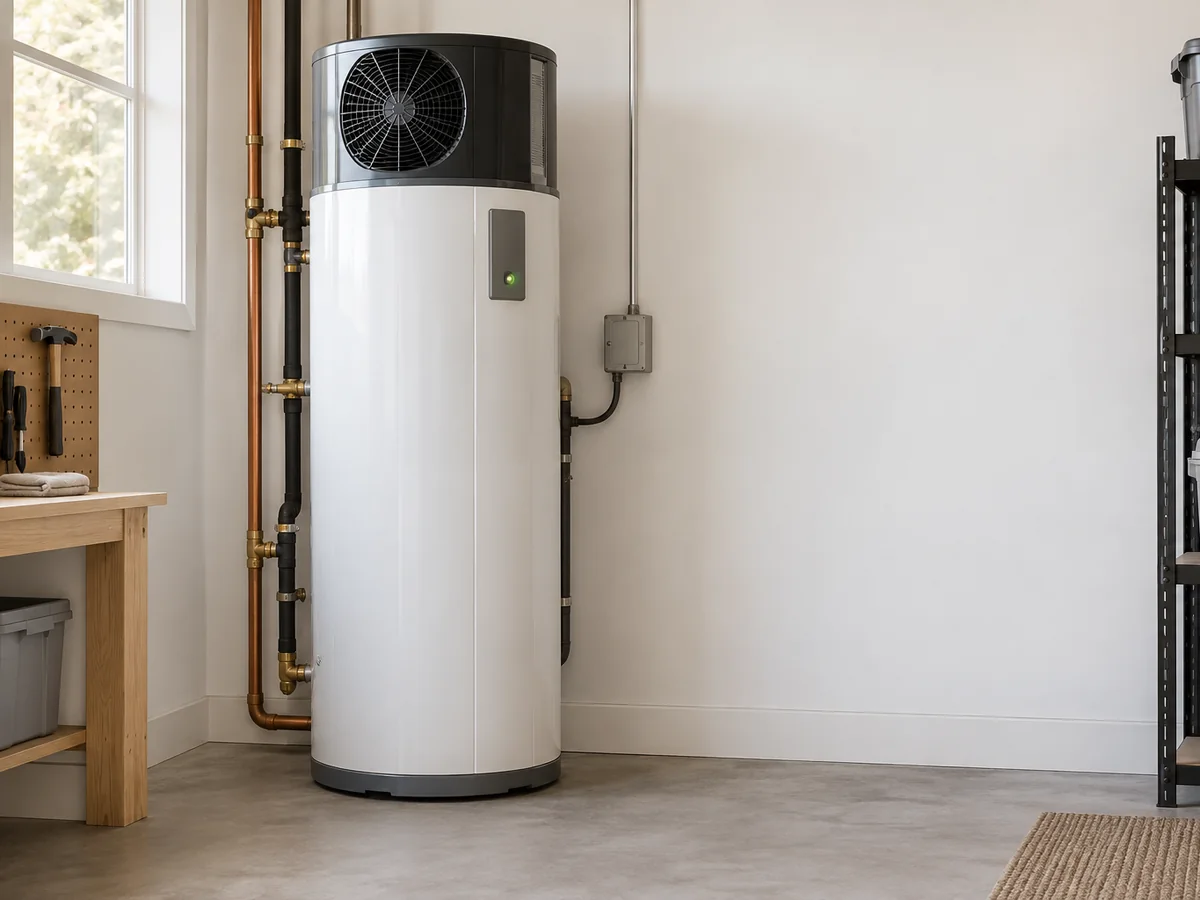
Heat pump water heater
B13Scenario A
Sets the electricity rate. Pick US average if you're not sure.
From EIA for US average. Use the rate on your bill if you know it.
Rate used: 18.4¢/kWh · US average · EIA reference 2025–26 (data as of 2026-09-26) ·
Estimated savings per year
Payback on the extra cost: 2.0 years.
- kWh per year, electric tank
- 4,345
- kWh per year, heat pump water heater
- 1,142
- Savings per year
- $589.26
- Payback on the extra cost
- 2.0 years
Estimate. Formula and sources are under “How it works”. Change any input; the result updates as you type.
2026 note: The federal 25C and 25D tax credits ended for installations after Dec 31, 2025. Our numbers use 2026 rules. State rebates, HEAR/HOMES programs and utility programs may still apply.
Formula
How it works
Every result here is an estimate; the UEF, the extra cost, the rebate and the rate are yours to edit.
- Heat needed per year = gallons × 8.34 × 70 °F × 365
- kWh per year = heat needed ÷ 3,412 ÷ UEF (resistance tank UEF 0.92; heat pump UEF as entered)
- Savings per year = (resistance kWh − heat pump kWh) × your rate
- Payback = (extra cost − rebates) ÷ savings per year. No federal credit: 25C ended for installations after Dec 31, 2025.
A heat pump water heater moves heat from the surrounding air into the tank instead of making it with a resistance element. At UEF 3.5 it uses about a quarter of the electricity of a standard electric tank for the same hot water.
Sources: ENERGY STAR (heat pump water heater UEF 3.3–4.0); DOE 10 CFR 430 (UEF test procedure); EIA Electric Power Monthly table 5.6.A; One Big Beautiful Bill Act (July 2025) for the end of 25C; HEAR program rules (up to $1,750 for a heat pump water heater, income-qualified).
Worked example
A worked example
A standard electric tank uses about 4,345 kWh a year for 64 gallons of hot water a day. A heat pump model at UEF 3.8 uses about 1,052 kWh. At California's reference rate of 32.0¢/kWh, that's an estimated $1,053.66 saved per year. With $1,000 in rebates against a $1,500 price difference, the remaining $500 pays back in about 0.5 years.
Reference
By state, at the default inputs
Estimated savings per year, with this page's default inputs and each state's reference prices (EIA reference 2025–26, data as of 2026-09-26).
| US average | $589.26 | 18.4¢/kWh |
|---|---|---|
| Alabama | $496.39 | 15.5¢/kWh |
| Alaska | $800.63 | 25.0¢/kWh |
| Arizona | $480.38 | 15.0¢/kWh |
| Arkansas | $416.33 | 13.0¢/kWh |
| California | $1,024.81 | 32.0¢/kWh |
| Colorado | $512.40 | 16.0¢/kWh |
| Connecticut | $960.76 | 30.0¢/kWh |
| Delaware | $544.43 | 17.0¢/kWh |
| District of Columbia | $608.48 | 19.0¢/kWh |
| Florida | $480.38 | 15.0¢/kWh |
| Georgia | $464.37 | 14.5¢/kWh |
| Hawaii | $1,345.06 | 42.0¢/kWh |
| Idaho | $384.30 | 12.0¢/kWh |
| Illinois | $544.43 | 17.0¢/kWh |
| Indiana | $496.39 | 15.5¢/kWh |
| Iowa | $432.34 | 13.5¢/kWh |
| Kansas | $464.37 | 14.5¢/kWh |
| Kentucky | $416.33 | 13.0¢/kWh |
| Louisiana | $400.31 | 12.5¢/kWh |
| Maine | $832.65 | 26.0¢/kWh |
| Maryland | $608.48 | 19.0¢/kWh |
| Massachusetts | $928.73 | 29.0¢/kWh |
| Michigan | $624.49 | 19.5¢/kWh |
| Minnesota | $496.39 | 15.5¢/kWh |
| Mississippi | $432.34 | 13.5¢/kWh |
| Missouri | $416.33 | 13.0¢/kWh |
| Montana | $416.33 | 13.0¢/kWh |
| Nebraska | $384.30 | 12.0¢/kWh |
| Nevada | $480.38 | 15.0¢/kWh |
| New Hampshire | $864.68 | 27.0¢/kWh |
| New Jersey | $704.55 | 22.0¢/kWh |
| New Mexico | $480.38 | 15.0¢/kWh |
| New York | $800.63 | 25.0¢/kWh |
| North Carolina | $464.37 | 14.5¢/kWh |
| North Dakota | $368.29 | 11.5¢/kWh |
| Ohio | $528.42 | 16.5¢/kWh |
| Oklahoma | $416.33 | 13.0¢/kWh |
| Oregon | $464.37 | 14.5¢/kWh |
| Pennsylvania | $592.47 | 18.5¢/kWh |
| Rhode Island | $928.73 | 29.0¢/kWh |
| South Carolina | $480.38 | 15.0¢/kWh |
| South Dakota | $416.33 | 13.0¢/kWh |
| Tennessee | $432.34 | 13.5¢/kWh |
| Texas | $496.39 | 15.5¢/kWh |
| Utah | $384.30 | 12.0¢/kWh |
| Vermont | $704.55 | 22.0¢/kWh |
| Virginia | $496.39 | 15.5¢/kWh |
| Washington | $384.30 | 12.0¢/kWh |
| West Virginia | $496.39 | 15.5¢/kWh |
| Wisconsin | $560.44 | 17.5¢/kWh |
| Wyoming | $400.31 | 12.5¢/kWh |
Questions
FAQ
How much does a heat pump water heater save?
At the US-average rate of 18.4¢/kWh and 64 gallons a day, a UEF 3.5 model saves an estimated $589.26 a year over a standard electric tank, and the $1,200 extra cost pays back in 2.0 years. In Washington (12.0¢/kWh) the saving is $384.30 and the payback 3.1 years.
Is there a federal tax credit for heat pump water heaters in 2026?
No. The 25C credit ended for installations after Dec 31, 2025. HEAR rebates (up to $1,750 for qualifying incomes, where your state runs the program) and utility rebates are what's left.
Do heat pump water heaters work in a garage?
They take heat from the air around them, so a garage that gets very cold in winter lowers their efficiency, and the unit relies more on its backup element. In a warm-climate garage they work well. If yours freezes, treat the UEF you enter as a best case.
What about noise and space?
The unit has a compressor and fan, so it makes some noise while it runs, and it needs room around it for air. Check the model's installation manual for the clearance and room size it requires.
What if I have a gas water heater?
This page compares against an electric tank. To compare a heat pump water heater with gas, use the Tankless vs Tank calculator, which shows gas tank, gas tankless and heat pump side by side.
Related